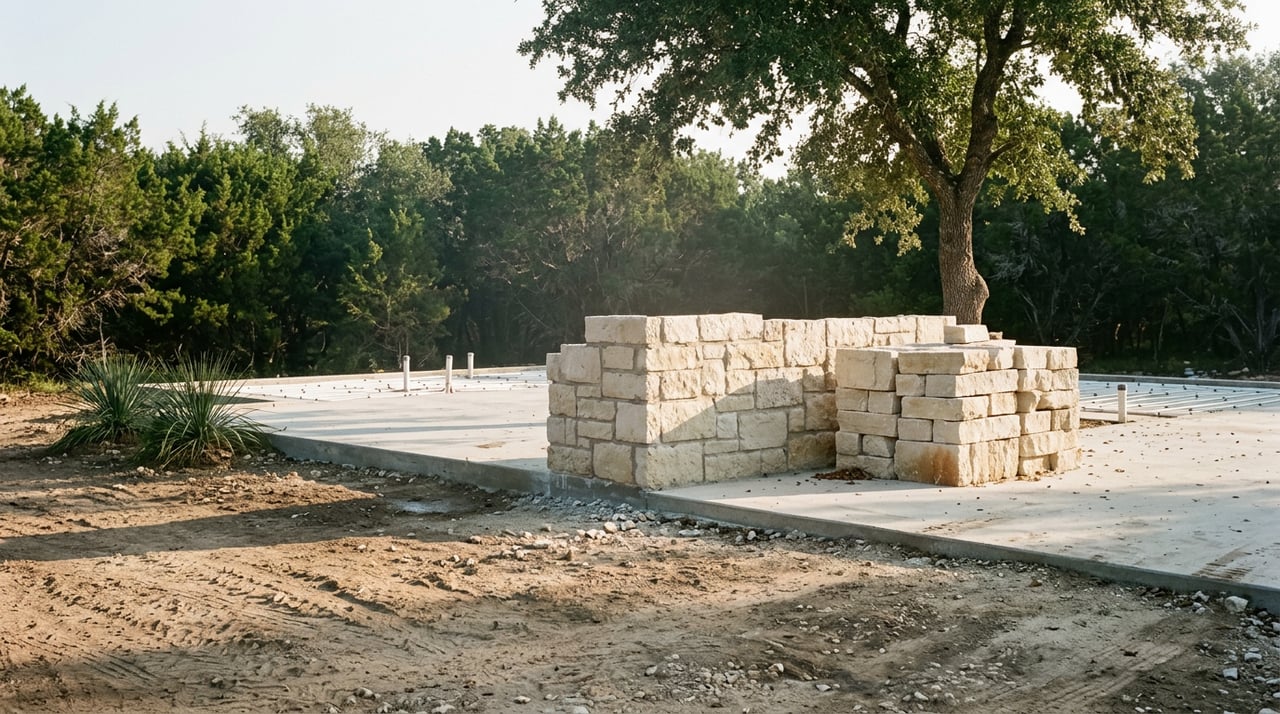
Two lots. Same road. Same live oak canopy. Same view down toward the Pedernales. One sits in Travis County. The other, a few hundred yards further out, sits in Burnet County. On paper they look like the same opportunity. In practice, they are two different projects with two different timelines and two different cost structures, and the deed will not tell you that. The county line will.
Spicewood is one of the few markets on the western Lake Travis corridor where a buyer can tour four or five properties in an afternoon and cross county lines without noticing. The area sits at the intersection of Travis, Burnet, and Blanco counties, and each county sets its own rules for the two systems that determine whether a piece of land is actually buildable: the septic system and the well. But if you are comparing two lots side by side and only one of them clears easily, that difference belongs in your offer strategy, not in a surprise six weeks into your build.
The Number That Actually Varies Isn't the Acreage
Buyers shopping Spicewood tend to anchor on acreage and view. Five acres with a canyon view reads as a known quantity. What it does not tell you is well depth, and well depth is where the real cost variation in this market lives.
Across the Hill Country, well depth in this part of the aquifer system ranges from around 300 feet to 600 feet or more, depending on the specific geology under a given parcel. A shallow well and a deep well are not a minor difference in drilling time. Deeper wells mean more casing, more pump capacity, and a materially higher cost to bring water online before you have poured a single foundation slab. Two lots that look identical from the road can sit on completely different water tables.
This is knowable before you write an offer. Requesting well logs from neighboring properties will not guarantee your own well's depth, but it gives you a realistic range to budget against instead of an optimistic guess based on the listing photos. On acreage where a well hasn't been drilled yet, that request should be standard practice, not an afterthought during option period.
Rainwater collection is a legitimate backup where well yield is uncertain, and it shows up often enough in Hill Country new construction that it is worth planning for rather than treating as a fallback. A properly sized system needs enough roof area, gutter capacity, and storage volume to carry a household through a dry stretch, plus a secondary plan for extended drought. It is a real answer. It is not a free one, and it needs to be designed in from the start rather than bolted on after the fact.
The Acre You Can't Actually Build On
Septic tells a similar story, and it interacts directly with the county question. Your septic system depends on soil conditions, and the system has to be sized and placed according to what the specific soil under your lot can absorb. Layer setbacks, easements, and septic field placement on top of that, and a one-acre lot that reads as spacious on a listing sheet can leave you with a build envelope far smaller than the acreage number suggests. On steeper or rockier parcels, that shrinkage can be significant enough to change what size home actually fits.
This is the part that catches buyers who are comparing Spicewood against a more conventional suburban lot. In a platted subdivision with city utilities, the buildable envelope is mostly a function of setback lines. In Spicewood, it is a function of setback lines, septic field geometry, soil percolation, and which county's engineering standard applies to your specific parcel. Two five-acre lots can have wildly different usable footprints once all of that is accounted for, and the difference is invisible until someone actually runs the numbers.
Texas Septic Solutions reports that, elsewhere in the Hill Country, counties have begun tightening the rural exemptions that once let large-acreage owners skip formal septic permitting altogether. That trend has not necessarily reached every corner of Travis, Burnet, and Blanco counties in the same way, which is exactly why the county line matters here. Assuming your neighbor's exemption applies to your parcel is a mistake worth avoiding.
Reading the Report Like a Project Manager, Not a Buyer
I spent more than fifteen years managing custom construction before I moved into real estate, and the habit that has followed me is simple: I do not take a seller's word for system condition. I read the inspection.
During option period, a well and septic evaluation should answer three questions in plain terms. What is the well's actual flow rate under load, not just its reported depth. What condition is the septic system in right now, including tank capacity and drain field performance, not just whether it passed its most recent inspection. And what would it cost to bring either system up to a standard you would be comfortable living with for the next decade, not just the standard required to close.
That third question is the one buyers skip most often, and it is the one that matters most on a property you plan to hold. A septic system that technically passes today can still be nearing the end of its useful life. A well that produces adequate flow in a wet year can behave very differently during a dry one. Asking for the actual data, not just a pass or fail, is what turns an inspection into a real basis for negotiation.
Why a Slower Market Rewards This Kind of Question
As of July 2026, the median list price for a home in Spicewood was around $850,000, with price per square foot down roughly six percent compared to the year before. That is a market that has cooled from its 2021 and 2022 pace, and a cooler market changes the leverage buyers have.
That single median also hides more than it reveals. Spicewood's inventory ranges from modest inland parcels to lakefront estates worth many times that figure, and the well and septic realities described above are part of why. Land that clears easily for water and wastewater costs less to develop than land a few hundred yards away that needs a deeper well or an engineered septic design. A median list price is a starting point for a conversation, not a number that tells you what your specific lot will cost to build on.
In a market where homes are sitting longer and sellers are more willing to negotiate, buyers have real room to ask for well logs, a full septic inspection, and repair credits tied to what those reports actually find. In a faster market, that kind of diligence sometimes got waived to win a bidding situation. Right now, it does not have to be.
Frequently Asked Questions
Does every Spicewood lot need its own well and septic system? Most acreage properties outside the platted subdivisions rely on private wells and septic systems rather than municipal utilities, since Spicewood is largely unincorporated. A few developments provide central water to their lots, so this is a detail to confirm for any specific property rather than assume either way.
Can I find out which county a lot is in before I tour it? Yes, and you should. Because Spicewood spans Travis, Burnet, and Blanco counties, confirming jurisdiction early lets you ask the right questions about septic engineering requirements and permit timelines before you fall in love with a specific parcel.
Does the county line affect resale value down the road? It can, indirectly. A property with documented, permitted systems and clear well data is simply easier for the next buyer's lender and inspector to evaluate. Keeping that paperwork organized while you own the home is worth the effort when you eventually sell.
If you are comparing Spicewood parcels right now and want a second set of eyes on well logs, septic reports, or what a specific lot's build envelope actually looks like once setbacks and field placement are drawn in, that is exactly the kind of question I like to work through before an offer goes in, not after. Casey Marquez works this market from the construction side as much as the contract side, and I am glad to walk a specific property with you. Let's Connect.
This article is general information, not legal, tax or financial advice. Consult a qualified professional about your situation.