Wondering how to choose the right new construction home in Rough Hollow when every street, builder, and lot seems a little different? You are not alone. In this part of Lakeway, the smartest decision usually comes down to more than a pretty model home or a polished design package. If you want a home that fits your lifestyle now and holds up well over time, it helps to know what to compare before you sign. Let’s dive in.
Why Rough Hollow needs a closer look
Rough Hollow is part of the larger Lakeway Highlands development, and the area is still under development with additional phases ahead. That matters because your experience may vary depending on the section, the builder, and what is still being built nearby.
For buyers, this is not a one-size-fits-all neighborhood decision. A home in one section may have different dues, rules, amenity access, and maintenance expectations than a home in another section with the same Rough Hollow address.
Official community information highlights a shoreline and Hill Country setting with about three miles of Lake Travis shoreline, roughly 20 to 22 miles of trails, a Yacht Club and Marina, Highland Village, a fitness center, and a resort-style pool and lazy river area. Those amenities are a major draw, but you should confirm exactly what comes with the property you are considering.
Start with the section, not just the address
One of the biggest mistakes buyers make in Rough Hollow is assuming the community name tells the whole story. It does not. The HOA structure is layered, and the community includes multiple associations and condominium sub-associations centered around Highland Village.
Before you fall in love with a floor plan, ask which section the home is in and which association governs that lot. You should also confirm what the dues cover, whether amenity access is included, and how exterior changes or additions are approved.
This matters even more if you are choosing between a lock-and-leave home and a more traditional single-family property. The maintenance picture can look very different depending on the product type and association structure.
Compare lot types before floor plans
In Rough Hollow, the lot often shapes the living experience as much as the house itself. Neighborhoods vary by frontage, elevation, and product type, so a plan that looks great on paper may function very differently on the actual homesite.
For example, The Point is positioned as a low-maintenance, lock-and-leave option on one of the highest peaks. Canyon Pass has 55-foot frontage, The Madrones and La Mesa have 63-foot frontage, Santaluz has 78-foot frontage, and Vista Ridge and Las Brisas use 90-foot homesites. The District offers more modern floor plans from about 2,100 to 2,806 square feet.
That variety means you should judge the home in context. Ask yourself how the garage sits on the lot, how much yard is usable, whether the driveway slope will affect daily convenience, and how the outdoor space actually lives.
Evaluate slope, drainage, and erosion early
Terrain is a real part of the Rough Hollow decision. The City of Lakeway notes steep drop-offs in the Canyonlands trail area, along with erosion-control features, and some trails require greater physical effort. That is useful context for buyers looking at hillside, canyon-edge, or cove-adjacent homesites.
When you tour a home, do not focus only on finishes. Ask about drainage, retaining walls, irrigation, and any slope-related maintenance that may come with the lot.
These questions matter because long-term ownership costs are not always obvious during the first showing. A stunning view can be worth it, but you want to understand the upkeep that comes with it.
Think carefully about outdoor living
Outdoor living carries more weight in Rough Hollow than it might in a flatter subdivision. Many homesites are marketed around canyon, cove, greenbelt, hill-country, or lake views, so your patio and yard are a big part of how the home performs.
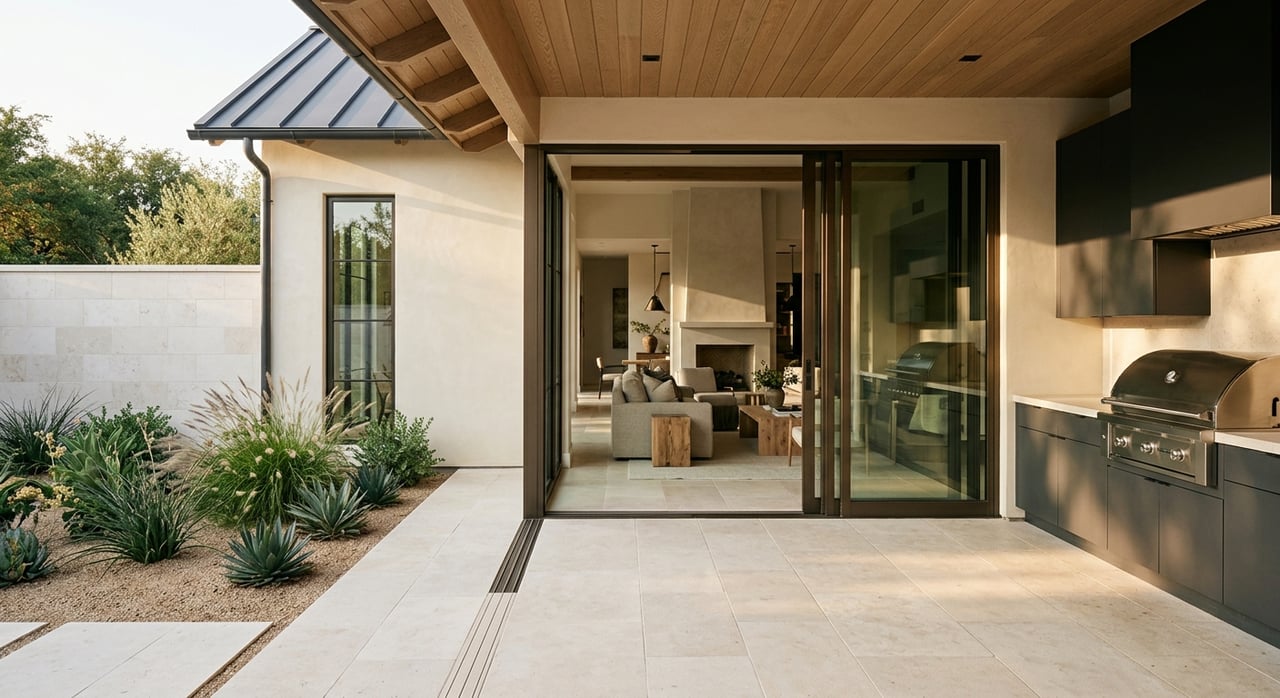
The key is to look past the staging. Pay attention to sun exposure, privacy, wind, patio size, and how the kitchen and living area connect to the outdoor room.
In real life, the best outdoor spaces are not just beautiful. They are usable in summer heat, comfortable in the evening, and designed to support the way you actually spend time at home.
Builder reputation is hyper-local here
Rough Hollow features a mix of builders, including Drees Homes, Westin Homes, David Weekley Homes, Brookfield Residential, Scott Felder Homes, Newmark Homes, and custom builders such as Arbogast Custom Homes, Laurel Haven Homes, and Sterling Custom Homes. That lineup gives buyers options, but it also means broad builder impressions are not enough.
The better question is how a builder performs in this neighborhood, on this lot type, at this finish level, and under this HOA structure. A builder may do very well in one product category and feel less compelling in another.
This is where construction knowledge becomes valuable. You want to look beyond the showroom effect and study execution details such as trim consistency, cabinet installation, tile layout, window placement, door operation, and how well the floor plan handles storage and flow.
Look at finish quality through daily use
In a lifestyle-driven community like Rough Hollow, finish quality is not just about what looks expensive. It is about how well the home supports the way you live.
The Yacht Club and Marina offers slip access, complimentary paddleboards and kayaks, member services, and a ship store. That makes practical features like garage layout, mudroom function, drop zones, and gear storage more important than they might be elsewhere.
A polished kitchen is great, but so is a garage that actually fits your vehicles and recreation equipment. A beautiful entry matters, but so does a laundry room that works for real routines.
Understand the builder warranty
New construction buyers should read the builder warranty carefully and avoid assuming all coverage works the same way. Federal Trade Commission guidance notes that a builder warranty is different from a paid home warranty or service contract.
Coverage often varies by component. Many workmanship and materials items may be covered for about one year, systems such as HVAC, plumbing, and electrical may be covered for about two years, and some major structural defects may be covered for up to 10 years.
The important part is the written detail. You should confirm what is covered, how claims must be submitted, and what deadlines apply. If an issue comes up, file claims in writing.
Always get an independent inspection
A new home is still a home that should be inspected. HUD encourages buyers to get an independent home inspection and notes that inspectors review structure, construction, and major systems such as electrical, plumbing, HVAC, windows, doors, foundation, and roof.
It is also wise to make your offer contingent on a satisfactory inspection before closing. That gives you room to understand the home’s condition and address concerns before the transaction is final.
In Rough Hollow, inspections are especially useful because the combination of new construction, varied terrain, and view-oriented lots can create issues that are easy to miss during a polished builder tour. An experienced eye can help you separate cosmetic appeal from lasting quality.
Verify school assignment by address
Rough Hollow is served by Lake Travis ISD, and district materials label Rough Hollow within the attendance-zone map. Community materials also note that younger students may attend Rough Hollow Elementary or nearby Serene Hills Elementary, while older students attend Lake Travis Middle School and Lake Travis High School.
At the same time, the Rough Hollow Elementary campus site lists a Spicewood address on Bee Creek Road. That is a good reminder not to assume school assignment based on community name alone.
If school zoning is important to your move, verify the exact assignment by property address before making a decision. That extra step can help you avoid surprises.
Plan for nearby construction and change
Because Lakeway Highlands and Rough Hollow are still being built out, nearby construction may remain part of the ownership experience for some time. New neighborhood releases continue in areas such as Highland Terrace, Vista Ridge, Vista Ridge Estates, and Arroyo Divide.
That does not mean you should avoid buying. It simply means you should go in with clear expectations about traffic patterns, construction activity, and how the area around your home may evolve.
For some buyers, getting in during active development is a positive because it opens more choices. For others, a more established section may feel like the better fit.
A smart Rough Hollow checklist
Before you choose a new construction home in Rough Hollow, keep this short list in mind:
- Confirm the exact section and governing HOA or sub-association
- Review dues, amenity access, and architectural approval rules
- Study the lot, not just the floor plan
- Ask about slope, drainage, retaining walls, irrigation, and erosion control
- Evaluate outdoor living for sun, wind, privacy, and usable shade
- Compare builder performance at the neighborhood and product level
- Read the builder warranty carefully
- Schedule an independent inspection before closing
- Verify school assignment by exact address
- Consider how ongoing development may affect your daily experience
Why guidance matters in Rough Hollow
Rough Hollow offers a lot to love, from shoreline access and trails to views and strong indoor-outdoor potential. But the right choice usually comes from looking deeper than the brochure.
When you compare homes through the lens of construction quality, lot performance, maintenance reality, and long-term livability, you put yourself in a much stronger position. That is especially true in a community where sections, builders, and homesites can vary so much from one block to the next.
If you want a clear, practical strategy for choosing the right new construction home in Lakeway, connect with Casey Marquez. Her construction-informed approach can help you evaluate builders, lots, finishes, and long-term value with more confidence.
FAQs
What should you ask before buying new construction in Rough Hollow?
- Ask which section the home is in, which HOA or sub-association governs it, what the dues cover, whether amenity access is included, which builder built it, what the warranty covers, and whether the lot has slope, drainage, or retaining-wall considerations.
How do lot types vary in Rough Hollow, Lakeway?
- Rough Hollow includes lock-and-leave products, narrower and wider frontage homesites, elevated sections, and modern plan neighborhoods, so the lot can affect driveway slope, yard usability, privacy, views, and outdoor living more than buyers expect.
Why does outdoor living matter so much in Rough Hollow?
- Many homesites are oriented toward canyon, cove, hill-country, greenbelt, or lake views, so the usability of the patio, shade, privacy, wind exposure, and indoor-outdoor flow can have a big impact on daily enjoyment.
Should you get an inspection on a new construction home in Rough Hollow?
- Yes. HUD encourages an independent inspection, and it can help you identify concerns with structure, systems, roof, foundation, windows, doors, plumbing, electrical, and HVAC before closing.
How do you verify school assignment for a Rough Hollow home?
- Verify the exact attendance assignment by property address through Lake Travis ISD materials rather than assuming the zoning based on the Rough Hollow community name alone.
Will there still be construction near new homes in Rough Hollow?
- Possibly. The Lakeway Highlands and Rough Hollow area is still under development, with additional phases and newer neighborhood releases, so nearby construction and changing traffic patterns can remain part of the ownership experience.