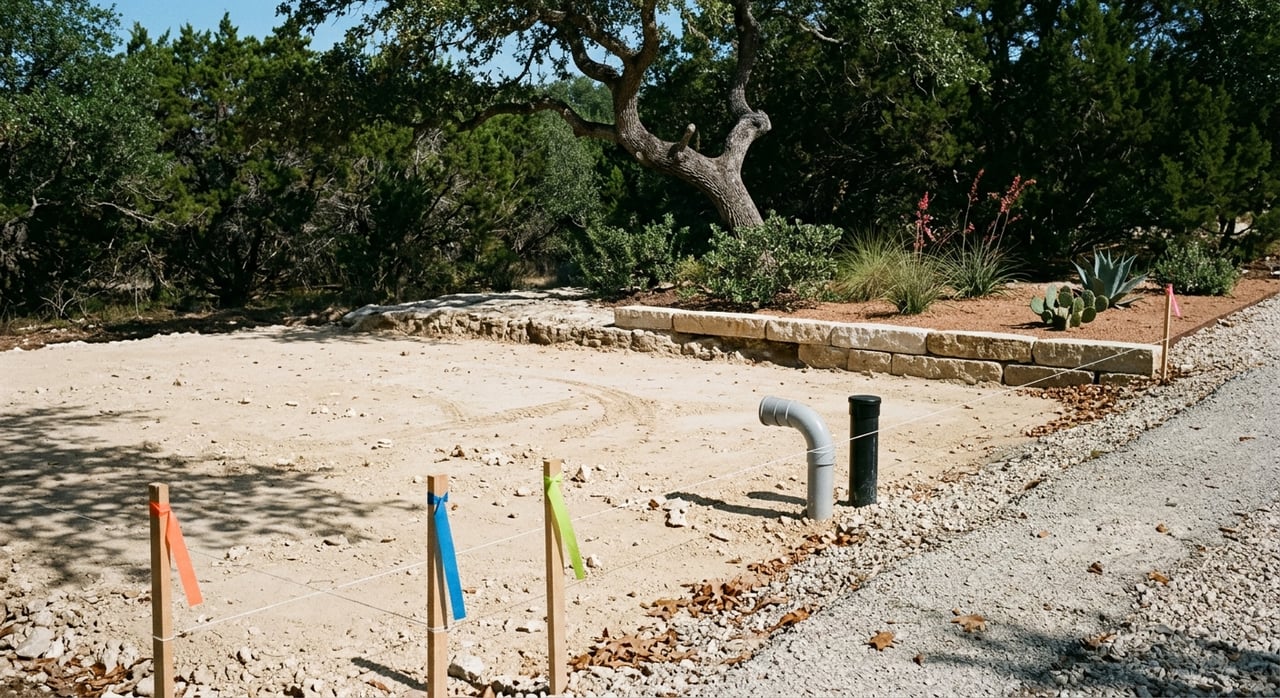
Buying land in Spicewood can feel exciting right up until the practical questions start piling up. Does the lot actually work for a custom home, or does the view come with expensive grading, septic challenges, or permitting hurdles? If you want to build in the Hill Country, understanding the land itself is just as important as imagining the home. Let’s walk through what to look for so you can make a smarter decision before you close.
Why Spicewood land needs extra diligence
Spicewood sits in the Texas Hill Country, where the landscape is often rolling to steep, with canyons, slopes, and limestone-based soils that can affect drainage, excavation, and site design. Texas Parks & Wildlife describes the region as rolling to hilly grassland on the Edwards Plateau, with steep canyons, springs, and elevations ranging from 500 to 2,250 feet.
That matters because a beautiful homesite is not always an easy homesite. In this part of Travis County, your land search should include buildability, access, utilities, and environmental constraints from day one, not after you fall in love with a floor plan.
Start with terrain and soil
In Spicewood, terrain and soil can have a direct impact on your budget. Sloped lots may require more grading, drainage planning, retaining walls, or foundation work than flatter parcels.
The local soil profile can also complicate excavation. The USDA Spicewood soil series describes moderately deep, well-drained soils formed in limestone-derived sediments, often with rock fragments and bedrock contact at relatively shallow depths. In practical terms, some lots may be harder and more expensive to dig than you expect.
Travis County also flags projects on slopes greater than 10 percent, along with cut-and-fill work and projects near waterways or critical environmental features, for additional review under its stormwater guidance. So when you compare two parcels, the one with the better view may also carry higher site-work costs.
What to notice on a showing
When you walk raw land, pay attention to more than the scenery. Try to understand how the lot may function once you add a home, driveway, utilities, and drainage improvements.
Look closely at:
- Slope changes across the property
- Natural drainage paths and low areas
- Rock outcroppings or shallow soil conditions
- The likely driveway route from the road to the build site
- Whether the most appealing home location is also the most practical one
Understand county rules and jurisdiction
One of the biggest misconceptions about raw land in Travis County is that no zoning means no restrictions. Travis County is clear that while counties generally do not have zoning authority, development in Travis County still requires permits.
You will also want to confirm whether the parcel is in unincorporated Travis County, inside city limits, or in an extraterritorial jurisdiction. According to the County’s subdivision-construction guidance, city subdivision rules can still apply in an ETJ.
This is why “buildable” should never be treated as a casual listing phrase. A parcel may be attractive and legally for sale, but that does not automatically mean it is simple to improve for a custom home.
Access is not automatic
Access deserves its own due diligence. If you plan to build on a maintained county right-of-way, Travis County requires a residential driveway permit, and rural driveway approaches are field-assessed for fit and safety.
If a proposed entry or improvement extends into county right-of-way, the County may also require additional review, including sight-distance considerations. That means legal access and functional access are not always the same thing.
Verify utilities early
Utilities can make or break a land purchase. Before you focus on house plans, make sure you understand whether the site has access to public water, whether a well may be needed, and whether septic will be required.
Travis County’s subdivision checklist treats water-supply commitments and wastewater or OSSF approvals as key early items. In other words, utility verification belongs near the top of your checklist, not near the end.
Septic planning affects the whole site
If the parcel will need an on-site sewage facility, the planning goes well beyond simply asking whether septic is allowed. The Texas Commission on Environmental Quality requires permits for septic systems, and Travis County’s residential OSSF application asks for details such as distances to property lines, wells, easements, creeks, slopes, and floodplain areas.
For you as a buyer, that means the lot has to accommodate more than a house pad. The home, driveway, septic components, drain field, and required clearances all need to fit together on the site.
Well questions are parcel-specific
If public water is not available, well planning becomes another major layer of due diligence. The Central Texas Groundwater Conservation District is studying groundwater interactions in the Trinity Aquifer in the Spicewood area, which is a useful reminder that well depth, production, and reliability can vary.
That does not mean a parcel is unsuitable. It means water planning should be addressed early with realistic expectations.
Watch for environmental and floodplain limits
Environmental constraints can reduce the usable part of a parcel even when the total acreage looks generous on paper. Travis County requires review of critical environmental features, waterways, and protective setback areas, and its environmental review FAQs note that site plans must show setbacks from those features.
The County also states that lot construction may not encroach on platted setbacks for greenbelts, waterways, caves, wetlands, or protected species habitat. In western Travis County, endangered species habitat review may also apply on some parcels.
Floodplain review matters too. Travis County notes that its floodplain jurisdiction applies in unincorporated areas only, so confirming floodplain status early can save time before design work begins.
Plan the buildable envelope, not just the acreage
A common mistake with acreage purchases is focusing on lot size instead of usable area. What matters most is the buildable envelope, meaning the part of the site where the home and supporting improvements can realistically go after accounting for setbacks, slope, drainage, access, septic, easements, and environmental features.
This is where orientation also becomes important. The U.S. Department of Energy notes that site orientation can affect daylighting, solar heat gain, and overall energy use, with south-facing design and shading often playing an important role in passive solar performance.
In a place like Spicewood, the final house location can influence nearly everything else, including:
- Driveway length and cost
- Grading and retaining needs
- Utility trenching distances
- Foundation approach
- Tree preservation choices
- Interior natural light
- How the home captures views while managing heat gain
Questions to answer before closing
If you are evaluating land for a custom home in Spicewood, try to answer the practical questions before you become emotionally committed. A calm, methodical review often protects both your budget and your future build timeline.
Here are some of the most important questions to ask:
- Is the parcel in unincorporated Travis County, city limits, or an ETJ?
- Does it have legal and practical access?
- Will you need a driveway permit?
- Is public water available, or will the property need a well?
- Will septic be required, and is there enough suitable area for it?
- Are there floodplain issues, drainage easements, or environmental setbacks?
- Do slopes or rocky soils suggest higher site-work costs?
- Does the lot have an approved final plat and supporting infrastructure if required?
Why construction insight matters in a land purchase
When you are buying raw land, the transaction is about more than acreage and price. You are really buying a future building opportunity, and the quality of that opportunity depends on details that are easy to miss if you only look at views, boundaries, and list photos.
That is why construction-informed guidance can be so valuable in the Spicewood market. A thoughtful review of terrain, access, utilities, and likely site costs can help you compare parcels more clearly and avoid surprises later in the process.
If you are considering land in Spicewood for a custom home, Casey Marquez can help you evaluate properties with both market perspective and a practical construction lens so you can move forward with more confidence.
FAQs
What should you check before buying land in Spicewood for a custom home?
- Confirm terrain, soil conditions, access, jurisdiction, utility availability, septic needs, floodplain status, and environmental constraints before closing.
Does land in Travis County need permits if there is no zoning?
- Yes. Travis County states that development still requires permits even though counties generally do not have zoning authority.
Why do slopes matter when buying a Spicewood homesite?
- Slopes can increase grading, drainage, foundation, and review requirements, which may raise the total cost to build.
Can a large Spicewood lot still have a small buildable area?
- Yes. Setbacks, easements, septic requirements, floodplain limits, drainage features, and environmental constraints can reduce the usable portion of the land.
Do you need to think about septic before buying land in Spicewood?
- Yes. If sewer is not available, septic planning is an early due diligence item because the site must physically support the system and required clearances.
Why does home orientation matter on a custom homesite in Spicewood?
- Orientation can affect natural light, heat gain, energy use, and how well your home captures views while fitting the site.